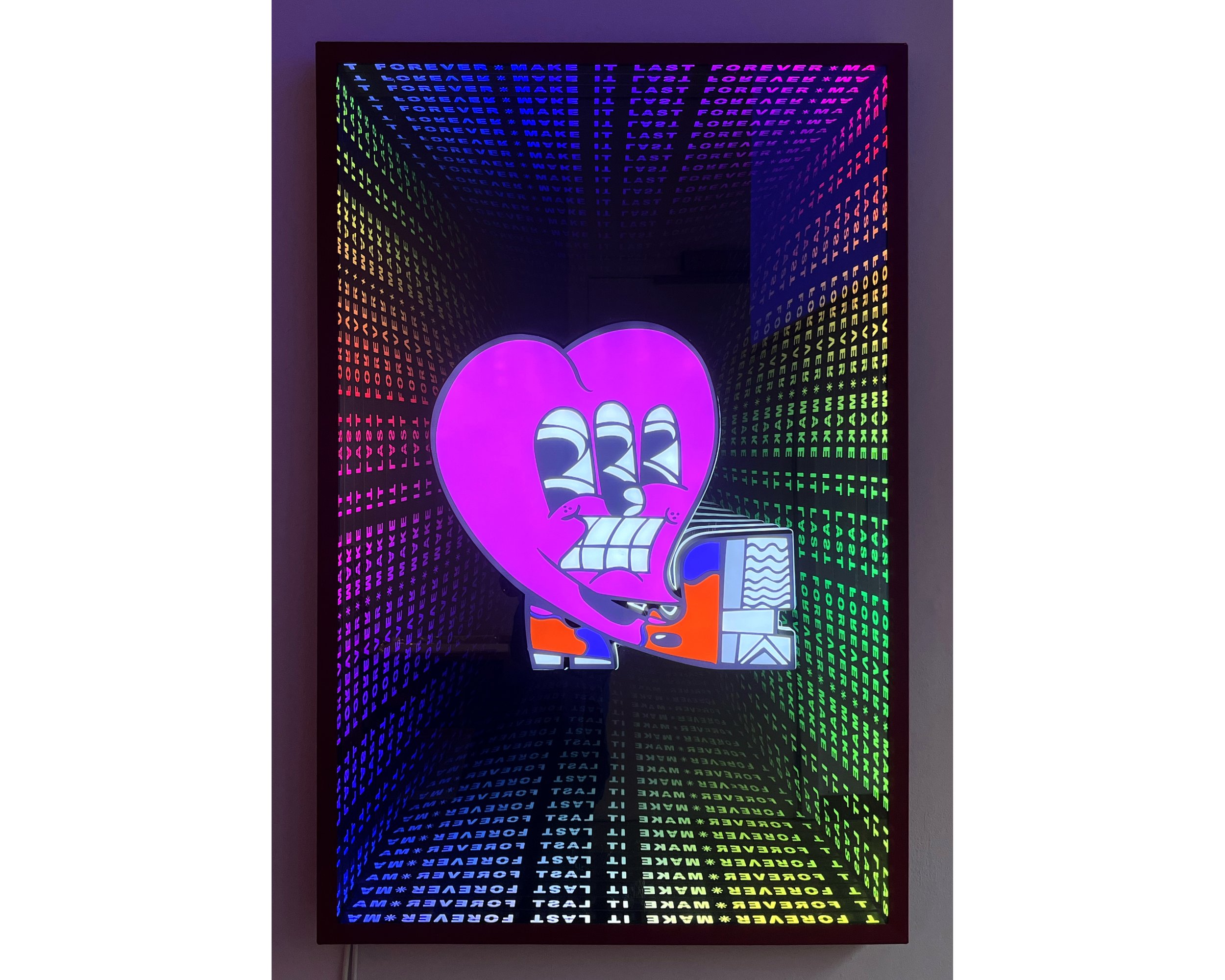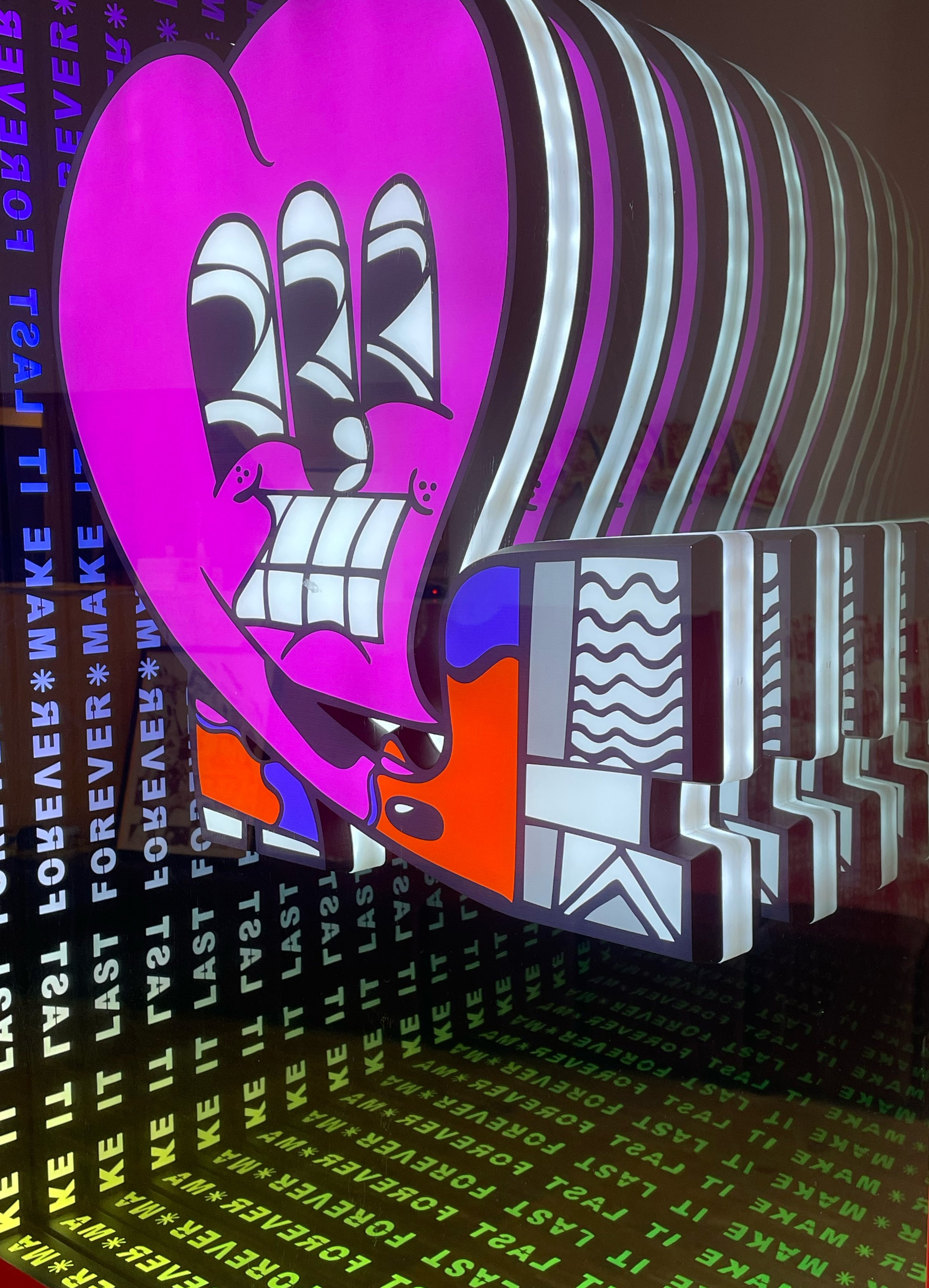
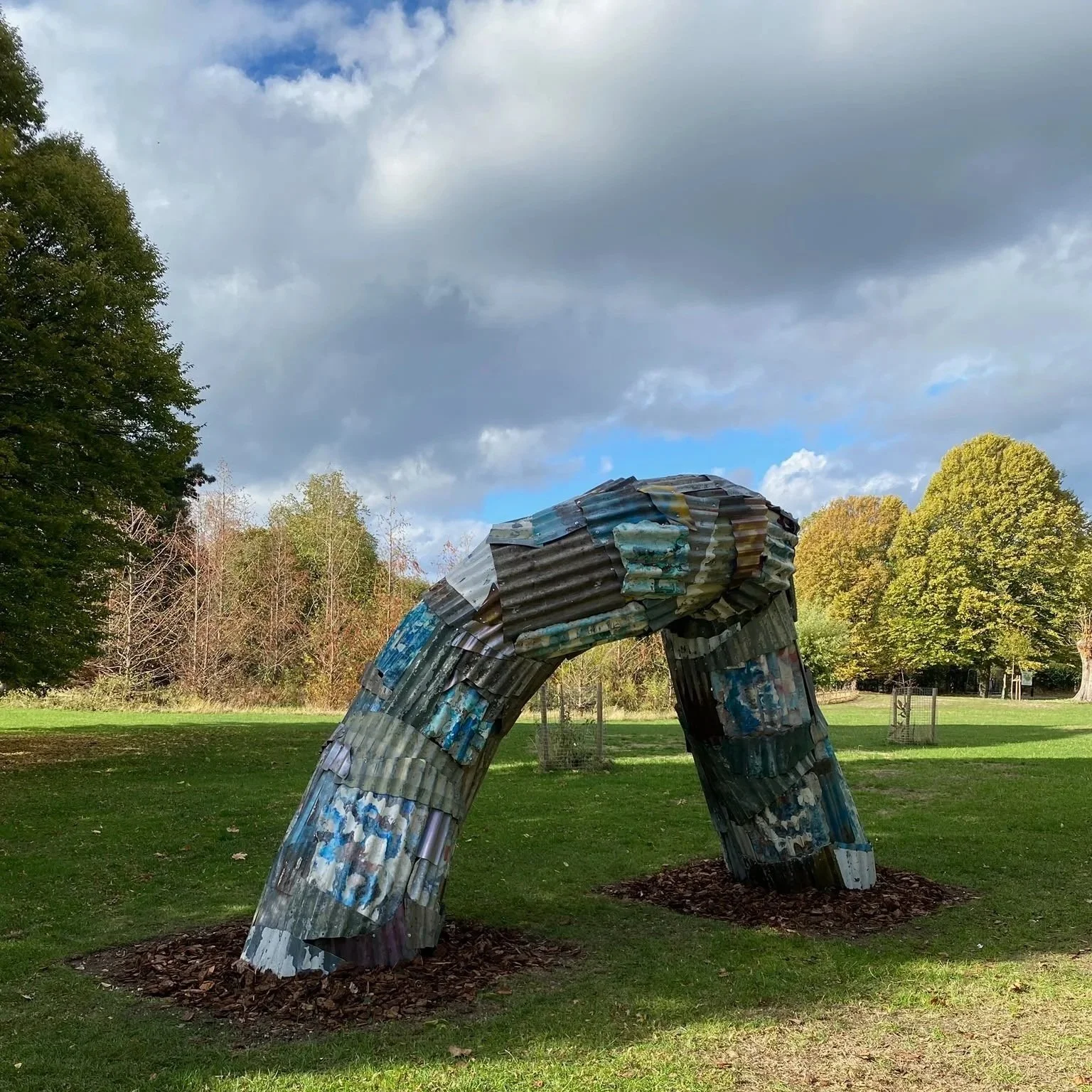
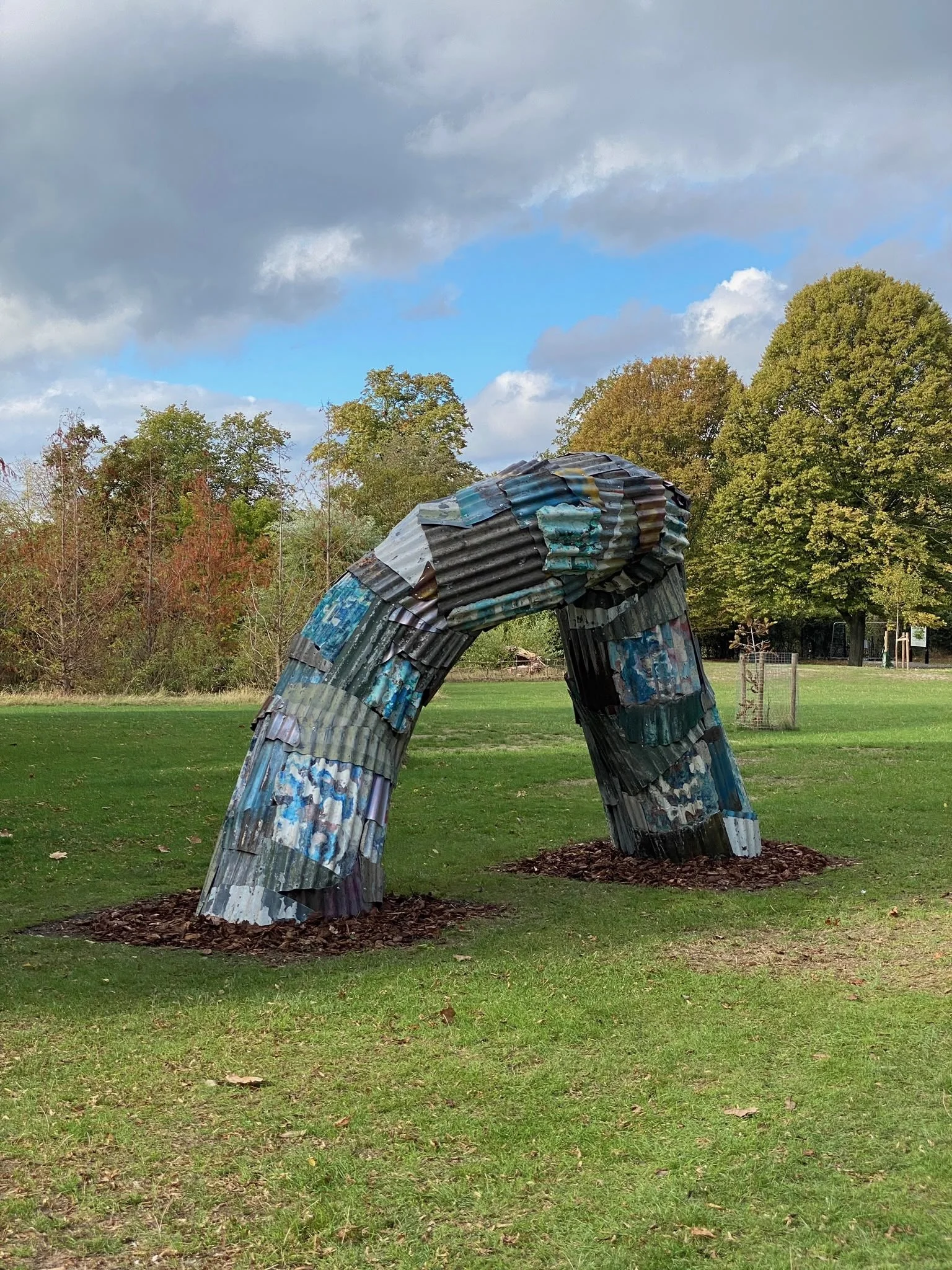
Catriona Robertson, Gigantic Pile, WYRM, 2026, Paper-crete, (recycled London newspaper pulp, cement, sand, pigment) rubble, re-claimed corrugated metal, plywood, timber, welded steel, spray paint.
280 x 295 x 90 cm,
Part of Frieze Sculpture 2026.
Sales enquires Gosia Łapsa-Malawska
+44 7745938472
Robertson will present WYRM, a monumental site-specific installation exploring urban decay, synthetic waste, and the regenerative potential of nature in a post-human future.
Installed within Regent’s Park, WYRM envisions a speculative ecology in which nature gradually reclaims the built environment through the cracks of its concrete foundations. Robertson’s installation features gargantuan worm-like forms that emerge from and burrow beneath the earth, quietly reshaping the urban landscape from within.
These imagined organisms represent an evolved species capable of digesting the synthetic debris of contemporary civilisation.
Robertson describes her practice as excavating new age sediments, they metabolise the remnants of human industry into the foundations of future architectures and ecosystems. Both unsettling and generative, the sculptures reflect cycles of destruction, adaptation, and renewal operating beyond human timescales within the vast temporal framework of Deep Time.
Rather than presenting a purely dystopian or utopian vision, WYRM offers a meditation on transformation: where ruin becomes resource, and collapse gives way to regeneration.
A Ritual of Breakage and Reclamation
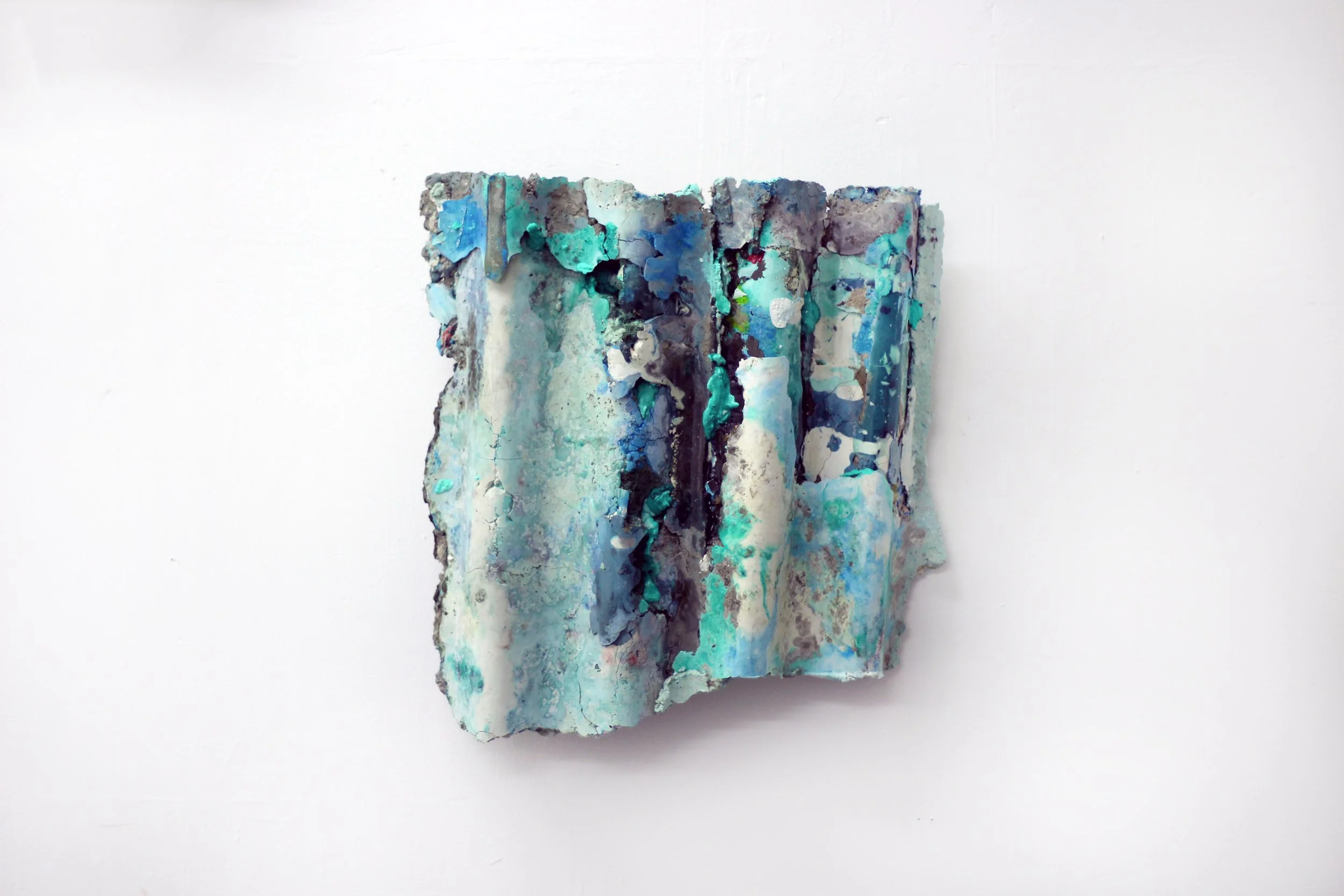
Robertson says: “my practice is a ritual of breakage, where my works are never fixed; instead, they evolve through continual processes of construction, fragmentation, and reassembly. Incorporating discarded materials sourced from the urban environment including reclaimed corrugated roofing, recycled newspapers, wood, carpet tiles, and textiles I create layered sculptural collages with surfaces that appear simultaneously industrial, fossilised and organic.”
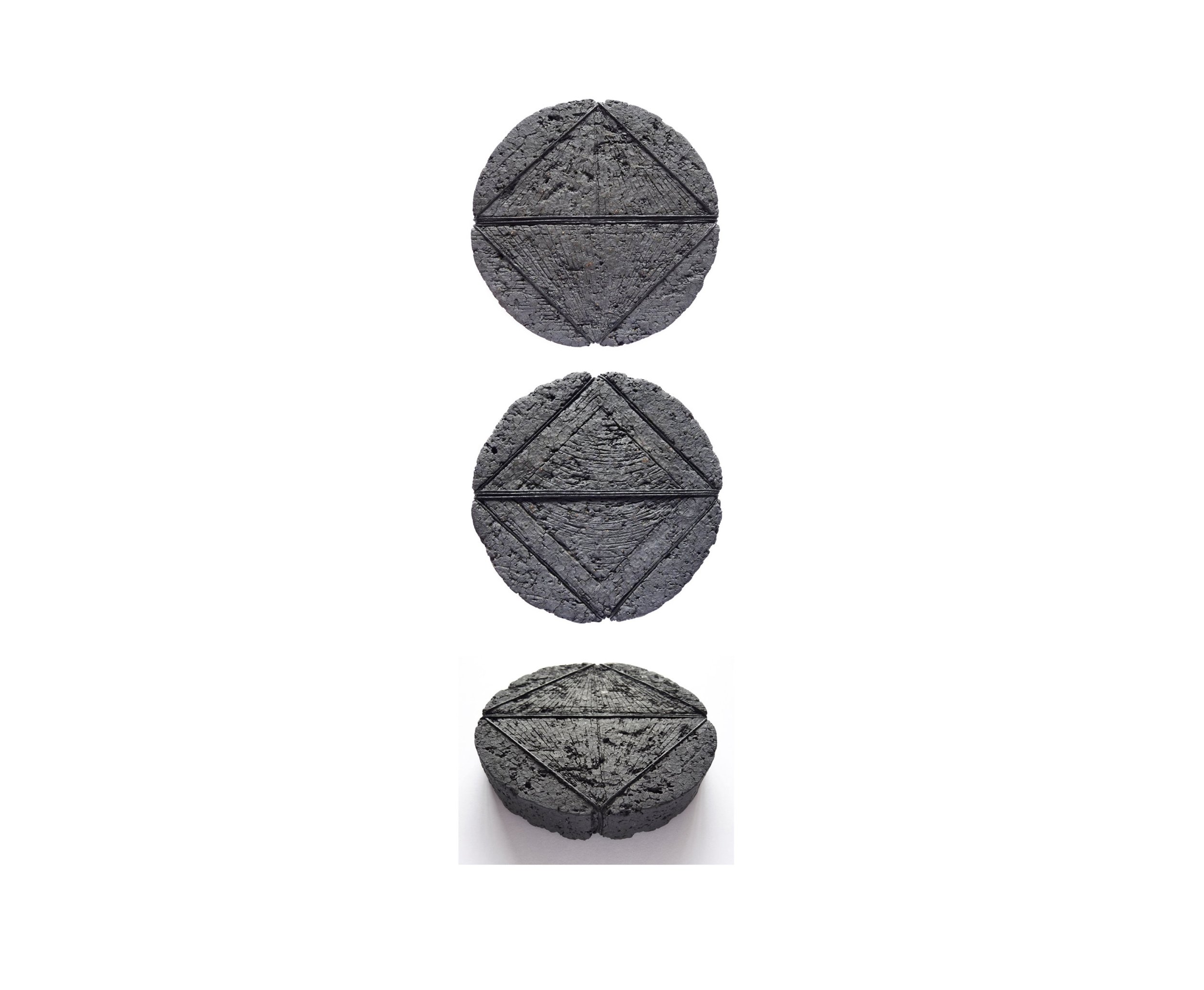
A defining element of her work is her signature material, “paper-crete,” a composite of recycled newspaper pulp and concrete. This material allows Robertson to reflect on the use of concrete as an industrial and organic material, enabling her to construct forms that evoke an image of future archaeological remnants: fragile yet enduring, ephemeral yet monumental. Paper, traditionally associated with memory and record, is compressed into structures suggestive of geological permanence and architectural ruin.
The resulting aesthetic resembles a form of “synthetic marble”, a plasticised concrete aggregate that reflects the throwaway culture of the Anthropocene and the emergence of synthetic strata within the earth itself. The eroded surfaces of the sculptures recall future fossils and decaying architectural relics, suggesting a future in which human construction and ecological systems become inseparably intertwined.
In a performative act mirroring geological cycles, Robertson frequently dismantles previous works and reincorporates their residue into new sculptures, allowing each iteration to emerge from the remnants of the last.
Additionally she has been commissioned by Purling (Art Games) to create the accompanying chess set, which will be available to view by appointment, along with others of her pieces in the same project (more information soon).
Robertson’s work responds to the interconnectedness of nature and the city, resulting in sculptures that embody an architectural imprint. WYRM invites us to consider how ruins might be transformed into a thriving, rewilded future ecology.
Catriona Robertson, Gigantic Pile, WYRM, 2026, Paper-crete, (recycled London newspaper pulp, cement, sand, pigment) rubble, re-claimed corrugated metal, plywood, timber, welded steel, spray paint.
280 x 295 x 90 cm,
Part of Frieze Sculpture 2026.
Sales enquires Gosia Łapsa-Malawska
+44 7745938472
Robertson will present WYRM, a monumental site-specific installation exploring urban decay, synthetic waste, and the regenerative potential of nature in a post-human future.
Installed within Regent’s Park, WYRM envisions a speculative ecology in which nature gradually reclaims the built environment through the cracks of its concrete foundations. Robertson’s installation features gargantuan worm-like forms that emerge from and burrow beneath the earth, quietly reshaping the urban landscape from within.
These imagined organisms represent an evolved species capable of digesting the synthetic debris of contemporary civilisation.
Robertson describes her practice as excavating new age sediments, they metabolise the remnants of human industry into the foundations of future architectures and ecosystems. Both unsettling and generative, the sculptures reflect cycles of destruction, adaptation, and renewal operating beyond human timescales within the vast temporal framework of Deep Time.
Rather than presenting a purely dystopian or utopian vision, WYRM offers a meditation on transformation: where ruin becomes resource, and collapse gives way to regeneration.
A Ritual of Breakage and Reclamation
Robertson says: “my practice is a ritual of breakage, where my works are never fixed; instead, they evolve through continual processes of construction, fragmentation, and reassembly. Incorporating discarded materials sourced from the urban environment including reclaimed corrugated roofing, recycled newspapers, wood, carpet tiles, and textiles I create layered sculptural collages with surfaces that appear simultaneously industrial, fossilised and organic.”
A defining element of her work is her signature material, “paper-crete,” a composite of recycled newspaper pulp and concrete. This material allows Robertson to reflect on the use of concrete as an industrial and organic material, enabling her to construct forms that evoke an image of future archaeological remnants: fragile yet enduring, ephemeral yet monumental. Paper, traditionally associated with memory and record, is compressed into structures suggestive of geological permanence and architectural ruin.
The resulting aesthetic resembles a form of “synthetic marble”, a plasticised concrete aggregate that reflects the throwaway culture of the Anthropocene and the emergence of synthetic strata within the earth itself. The eroded surfaces of the sculptures recall future fossils and decaying architectural relics, suggesting a future in which human construction and ecological systems become inseparably intertwined.
In a performative act mirroring geological cycles, Robertson frequently dismantles previous works and reincorporates their residue into new sculptures, allowing each iteration to emerge from the remnants of the last.
Additionally she has been commissioned by Purling (Art Games) to create the accompanying chess set, which will be available to view by appointment, along with others of her pieces in the same project (more information soon).
Robertson’s work responds to the interconnectedness of nature and the city, resulting in sculptures that embody an architectural imprint. WYRM invites us to consider how ruins might be transformed into a thriving, rewilded future ecology.